Architecture of KAI Group Subsidiaries Ecosystem: Intermodal Rail Synergy & Integrated Transport Infrastructure in Indonesia
The institutional transformation of PT Kereta Api Indonesia (Persero) marks a historic evolution from a conventional railway operator into a conglomerate providing transportation ecosystem solutions, multimodal logistics, and integrated asset management. Under the new ownership structure of PT Danantara Asset Management (Persero) (99%) and the Republic of Indonesia via BP BUMN (1%), KAI functions as an operating holding company orchestrating six direct subsidiaries, the Whoosh High-Speed Rail consortium (PSBI), and an urban intermodal integration entity (MITJ), with consolidated total assets exceeding Rp105.43 Trillion.
Ownership Structure and KAI Group Ecosystem Architecture
The institutional transformation of PT Kereta Api Indonesia (Persero) marks a decisive shift from a conventional railway operator toward a conglomerate providing transportation ecosystem solutions, multimodal logistics, and integrated asset management. Rooted in the founding of Djawatan Kereta Api Repoeblik Indonesia (DKARI) on September 28, 1945 via Ministry of Transportation Notice No. 1/KA of 1946, the enterprise subsequently transformed into DKA (1950), Perusahaan Nasional Kereta Api (1963), Perusahaan Jawatan Kereta Api (1971), Perusahaan Umum Kereta Api (1991), before officially becoming a limited liability company (perseroan terbatas) in 1998.
The corporation's ownership landscape underwent fundamental restructuring with the transfer of majority government ownership to the Daya Anagata Nusantara Investment Management Agency through PT Danantara Asset Management (Persero) at 99%, while the Government of the Republic of Indonesia retains a 1% shareholding through the State-Owned Enterprises Regulatory Agency (BP BUMN), which holds the special rights of the Series A Dwiwarna Share.
In managing the national mobility value chain, PT Kereta Api Indonesia (Persero) serves as an operating holding company overseeing six direct subsidiaries, one subsidiary established as a consortium for a national strategic project, and one joint venture entity spanning SOE-regional enterprise (BUMD) ownership. A minority shareholding in the majority of direct subsidiaries is held by the Railway Employee Welfare Foundation (Yayasan Pusat Kesejahteraan Karyawan Kereta Api / Yayasan Pusaka), ranging from 0.10% to 0.70%. This fulfills limited liability corporate statutory requirements while aligning employee welfare interests with the commercial performance of the subsidiaries.
KAI Group Conglomerate Architecture (Tree Chart)
Operator of Jabodetabek and Jogja-Solo Commuter Line EMU networks, Soekarno-Hatta Airport Rail Link, and Merak/Bandung/Surabaya Local Trains. Carried 400.74 million passengers in 2025.
End-to-end total multimodal logistics solutions: Kalog Express (183 service points), Kalog Plus (containers, cement, hazardous waste), and Kalog Pro (South Sumatra coal handling). Revenue Rp1.14 Trillion.
On-board train dining catering, On-Trip Cleaning (OTC), Res-Parking station parking management, station security, and Loko Café. Recorded a net profit of Rp136.7 Billion (+24%).
Operating 12 business lines: luxury tourist train charters (Nusantara, Priority, Panoramic), heritage sites Lawang Sewu & Ambarawa Museum, Shower n Locker, and Gambir Transit Hotel.
Commercialization of station lands, development of Samesta Transit-Oriented Development (TOD) vertical housing with Perumnas, and railway civil engineering construction & level-crossing posts.
Operator of YIA Kulon Progo Airport Rail Link (2.8 million pax), Kualanamu Airport Rail Link Medan, and Srilelawangsa Binjai Regional Commuter. Served a total of 6.9 million passengers in 2025 (+20%).
Lead entity of the Indonesian SOE consortium controlling 60% equity in PT KCIC (Whoosh Jakarta-Bandung High-Speed Railway). Carried approximately 6 million passengers throughout 2025.
Strategic SOE-DKI Jakarta BUMD joint venture for physical integration across 72 rail stations with Transjakarta halts, integrated pedestrian plazas, and unified fare ticketing.
Comprehensive Profiles of Direct Subsidiaries
1. PT Kereta Commuter Indonesia (KAI Commuter)
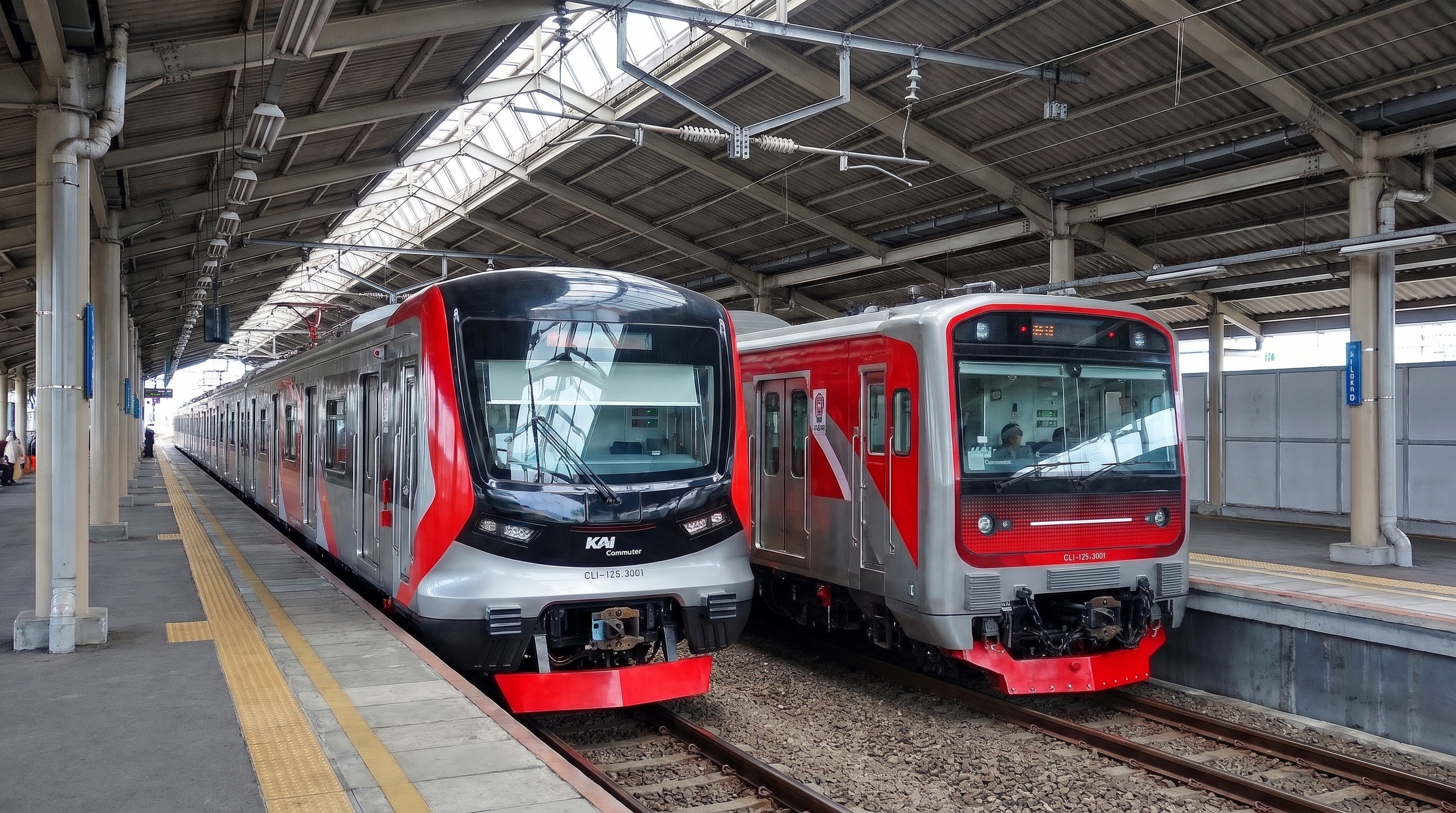
PT Kereta Commuter Indonesia was established on September 15, 2008, initially under the name PT KRL Commuter Jabodetabek, as a corporate spin-off of the commuter rail transport division from the parent company to address surging daily commuter demand across the capital's agglomeration. The brand transformation to KAI Commuter was solidified in September 2017 following the expansion of the company's operational mandate to urban rail networks outside Jakarta.
The company's business portfolio is concentrated on operating urban and regional passenger rail services under the Public Service Obligation (PSO) scheme. Its operational footprint spans the Jabodetabek Commuter Line electric multiple unit (EMU/KRL) network (Bogor/Nambo Line, Cikarang Loop Line, Rangkasbitung Line, Tangerang Line, and Tanjung Priok Line), the Yogyakarta-Solo-Palur Commuter Line operating since 2021, and the Prambanan Ekspres (Prameks) passenger train on the Yogyakarta-Kutoarjo corridor. Between late 2020 and 2022, KAI Commuter assumed operational responsibility for Regional Local Trains: Region 1 Merak, Region 2 Bandung Raya, and Region 8 Surabaya. Its portfolio expanded further in late 2022 through the operational handover of the Soekarno-Hatta Airport Rail Link (Basoetta) Commuter Line from PT Railink.
KAI Commuter's operational assets comprise thousands of EMU passenger cars maintained across Bukit Duri Depot, Depok Depot, Manggarai Depot, and Klaten Depot, serving over one hundred active stations throughout Java. To execute rolling stock renewal amid the phased retirement of earlier-generation imported EMU fleets, the company is carrying out a fleet renewal program valued at Rp9.18 trillion. This program encompasses a procurement contract for 16 brand-new domestically manufactured EMU trainsets from PT INKA valued at Rp3.83 to Rp3.85 trillion, a retrofit contract for 19 existing trainsets by PT INKA valued at over Rp2.23 trillion, and the emergency import of 3 new EMU trainsets from CRRC Sifang (China) valued at Rp783 billion. The capital expenditure program is backed by a State Capital Injection (PMN) allocation of Rp3.8 trillion in 2025 to reinforce mass transit reliability.
2. PT Railink (KAI Bandara)
PT Railink was established on September 28, 2006, as a joint venture between PT Kereta Api Indonesia (Persero) and PT Angkasa Pura II (Persero) to provide direct rail integration between urban centers and international airports. The company commenced commercial passenger operations on July 25, 2013, connecting Medan Station to Kualanamu International Airport utilizing international-standard diesel electric multiple units (DEMU/KRDE).
KAI Bandara's operational footprint encompasses two primary corridors. Within Regional Division I North Sumatra, the company operates round-trip services on the Medan-Bandar Khalipah-Batangkuis-Araskabu-Kualanamu alignment, alongside managing operations of the Srilelawangsa Local Train (Medan-Binjai-Kuala Bingai) since September 1, 2023, featuring automated ticketing via the Airport Railway Ticketing System (ARTS). In Java, the company has held full operating rights since November 2022 for the Yogyakarta International Airport (YIA) Rail Link connecting Yogyakarta Station, Wates, and YIA Airport in Kulon Progo through a hybrid of express and subsidized regular services. Managed facilities include modern DEMU trainsets, integrated airport terminal rail stations directly connected to airline departure concourses, and dedicated executive airport passenger waiting lounges.
3. PT Kereta Api Logistik (KAI Logistik)
Established on September 8, 2009, PT Kereta Api Logistik serves as the vanguard for rail-based freight market penetration to drive down elevated national logistics costs. The company holds an official license as a Multimodal Transport Operator providing integrated end-to-end total supply chain solutions.
The company's product portfolio is structured across three commercial segments:
- KALOG Express: Serves retail, courier, parcel, light cargo, and intercity motorcycle delivery segments supported by over 183 station service points across Java, Sumatra, and Bali.
- KALOG Plus: Handles high-volume freight haulage, including port container rail management, bagged/bulk cement, distribution of fuel oil and crude palm oil (CPO), as well as certified transport of Hazardous and Toxic Materials (B3).
- KALOG Pro: Delivers corporate business-to-business (B2B) solutions through integrated coal handling in Southern Sumatra, project logistics management, bonded warehousing, and inland container depot operations.
KAI Logistik's operational infrastructure is strategically positioned across key national logistics hubs, including freight terminals at Sungai Lagoa (Tanjung Priok), Klari (Karawang), Kalimas (Surabaya), Gedebage (Bandung), along with a modern 800-square-meter dry warehouse facility at Kampung Bandan (Jakarta) and a 1,452-square-meter green warehouse facility in Cirebon equipped with an autonomous 20,000-watt rooftop solar panel installation.
4. PT Reska Multi Usaha (KAI Services)
PT Reska Multi Usaha was incorporated on July 2, 2003, with an initial mandate to manage train dining car units and catering logistics aboard executive and business class passenger trains. Responding to market demands for diversification across transit support industries, KAI Services transformed into a Central of Services providing integrated facilities and passenger comfort solutions across the railway group's operational footprint.
KAI Services' operational portfolio functions under three core business units:
- On-Board Services: Encompasses dining car management, in-transit food and beverages on train, themed regional culinary programs such as Warteg on Train aboard KA Batavia, provision of passenger comfort amenities (including hygienic blankets and pillows), and On-Trip Cleaning (OTC) teams dedicated to continuous en-route rail hygiene.
- Integrated Facility Service: Provides station facility management services encompassing station sanitation and beautification (cleaning and beautification), vehicular parking operations (Res-Parking) across major terminal stations, physical security for stations and right-of-way rail assets via specialized security personnel, and comprehensive manpower outsourcing solutions.
- Commercial Services: Operates the modern "Loko Café" station coffee house chain, corporate event catering units, and centralized commissary kitchens supplying ready-to-eat meals across the railway retail distribution network.
5. PT Kereta Api Pariwisata (KAI Wisata)
PT Kereta Api Pariwisata was established on September 8, 2009 (initially operating during its pioneer phase under the Indorailtour brand) to capture niche market segments for railway-based special-interest tourism as well as to monetize the historical value of national railway heritage assets.
The company's commercial portfolio currently manages 12 integrated business lines:
- The operation and chartering of exclusive tourist carriages coupled to regular train services or operated independently as dedicated charter trains, encompassing the Nusantara, Bali, Toraja, Sumatera, Jawa, Priority, Imperial, Panoramic carriages, as well as the luxury Diesel Multiple Unit Kereta Istimewa.
- The operation of heritage steam excursion train journeys on the Ambarawa–Tuntang line (Central Java) and the Sawahlunto–Muaro Kalaban line (West Sumatra).
- The management of cultural heritage destinations and educational railway tourism sites, specifically the Lawang Sewu heritage complex in Semarang and the Ambarawa Railway Museum.
- The provision of station hospitality facilities, including the Gambir Transit Hotel, luggage storage and premium shower facilities "Shower n Locker" at major hub stations (Gambir, Pasar Senen, Yogyakarta, Solo Balapan, Surabaya Gubeng, and Sidoarjo), as well as the management of the Luxury Lounge and Anggrek Lounge.
- The management of official corporate travel documents and tour ticketing, the provision of frontliner personnel and KAI Group Contact Center 121 agents, corporate travel agency services for Tour & MICE (Meeting, Incentive, Convention, and Exhibition), the digital porter booking application (ePorter), and vehicle leasing supporting catering logistics.
6. PT Kereta Api Properti Manajemen (KAI Properti)
PT Kereta Api Properti Manajemen was established on September 8, 2009, to secure legal title, optimize commercial value, and leverage land and building assets owned by KAI spanning across the Indonesian railway network.
The company's operational portfolio encompasses three core business pillars:
- Property asset management and optimization through land leasing, repurposing of non-operational buildings, arrangement of station retail commercial spaces, and securing right-of-way boundaries through legal land certification in collaboration with the agrarian ministry.
- Transit-Oriented Development (TOD), in which the company acts as a strategic partner developing commuter rail station-integrated vertical housing in partnership with Perum Perumnas, such as Samesta Mahata Margonda at Pondok Cina Station, Samesta Mahata Tanjung Barat at Tanjung Barat Station, and Samesta Mahata Serpong at Rawa Buntu Station.
- Railway infrastructure engineering and construction services covering new track construction, railway bridge maintenance, overhead catenary system (LAA) installation, station platform and canopy revamping, as well as procurement and installation projects for hundreds of railway level crossing guard posts across Java and Sumatra.
Strategic Joint Venture Entities and Affiliated Companies
PT Pilar Sinergi BUMN Indonesia (PSBI) and High-Speed Rail Consortium
PT Pilar Sinergi BUMN Indonesia (PSBI) was established on October 2, 2015, as an Indonesian SOE consortium vehicle partnering with a Chinese corporate consortium (Beijing Yawan HSR Co. Ltd.) to incorporate PT Kereta Cepat Indonesia China (KCIC), which is responsible for financing, constructing, and operating the Jakarta–Bandung High-Speed Railway (Whoosh). Within the KCIC structure, PSBI serves as the 60% majority shareholder, while Beijing Yawan holds 40%.
The internal equity ownership composition of PSBI underwent restructuring pursuant to Presidential Regulation No. 93 of 2021, which appointed KAI as lead of the SOE consortium replacing PT Wijaya Karya (Persero) Tbk. Under this new mandate, KAI commands majority equity ownership in PSBI ranging from 51.37% to 58.00%, while the remainder is jointly owned by PT Wijaya Karya (Persero) Tbk (~29% – 38%), PT Jasa Marga (Persero) Tbk (~10% – 12%), and PT Perkebunan Nusantara VIII (~1% – 2%).
Whoosh operates over a 142.3-kilometer corridor connecting Halim Station in East Jakarta, Karawang, Padalarang (the integration transfer point for Feeder Trains to Bandung Station), and Tegalluar Summarecon in Bandung Regency, with commercial operating speeds of up to 350 km/h. KAI oversees operational management, ticketing reservation integration via Access by KAI, feeder train rolling stock provisioning, and station precinct planning.
PT Moda Integrasi Transportasi Jabodetabek (MITJ)
PT Moda Integrasi Transportasi Jabodetabek was established on January 10, 2020, as a strategic joint venture between the Provincial Government of DKI Jakarta through PT MRT Jakarta (Perseroda) with a 51% equity stake, and the Ministry of State-Owned Enterprises through PT Kereta Api Indonesia (Persero) with a 49% equity stake.
The establishment of MITJ aims to unify route planning, passenger flow management, and physical and multimodal payment integration across public transit networks in the Greater Jakarta (Jabodetabek) region. The company's mandate encompasses precinct planning and passenger circulation arrangements across 72 railway stations throughout Jabodetabek to seamlessly interface with MRT Jakarta, LRT, Transjakarta, and micro-transit feeder modes.
The initial integration phase was successfully delivered at four flagship pilot stations—Juanda, Sudirman, Tanah Abang, and Pasar Senen—subsequently expanded to Tebet, Manggarai, Palmerah, and Gondangdia stations. This initiative re-engineered sheltered pedestrian walkways, segregated ride-hailing pick-up/drop-off zones, consolidated feeder bus stops, and designed unified ticketing and integrated fare systems to achieve the strategic target of 75% public transit modal share among Greater Jakarta residents.
Operational Performance, Consolidated Financials, and Contribution to Parent Company
The portfolio synergies among subsidiaries and joint ventures underpin the operational resilience and consolidated financial stability of KAI Group. In Fiscal Year 2025, KAI Group recorded total consolidated operating revenue of Rp35.76 trillion and profit for the year reaching Rp2.28 trillion. The corporation's asset structure surpassed Rp105.43 trillion with total equity of Rp39.29 trillion, accompanied by passenger transport volume reaching 492.66 million passengers and freight logistics volume of 69.57 million tons.
KAI Commuter's ridership growth from 374.48 million passengers in 2024 to 400.74 million in 2025 was driven by operational stability following the operational pattern reconfiguration at Manggarai Station, alongside expanded commuter rail frequencies across the Yogyakarta–Solo agglomeration and local regional commuter corridors in West Java and East Java. Its operating revenue approached Rp3.7 trillion with sustained profit margins, maintaining its position as the core anchor of the group's mass transit passenger volume.
KAI Services demonstrated the efficacy of expanding station support services and onboard passenger comfort businesses, achieving a 13% increase in operating revenue to Rp2.79 trillion and a 24% surge in net profit to Rp136.7 billion. The primary driver of this growth stemmed from the Integrated Facility Service segment, which posted revenue growth exceeding 70% in station cleaning and facility maintenance, complementing robust 27% growth across onboard dining car catering operations.
KAI Logistik maintained commercial revenue growth of 4% to Rp1.14 trillion in 2025 despite a reduction in managed cargo volume from 27.0 million tons to 22.9 million tons. This volume reduction reflected market dynamics within South Sumatra's coal mining industry; however, KAI Logistik offset the downturn by optimizing rates for value-added cargo services, expanding containerized freight volume by 13%, and achieving a 34% surge in hazardous and toxic waste (B3) haulage.
KAI Bandara registered an accelerated 20% year-on-year increase in passenger volume, reaching 6.9 million passengers in 2025. This surge was anchored by the performance of the YIA Airport Rail Link in Kulon Progo, which served 2.8 million passenger movements throughout 2025, alongside the sustained operational reliability of Kualanamu Airport Rail Link and Srilelawangsa services in Medan.
KAI Properti posted a net profit prognosis of Rp43.75 billion in 2025 generated through land monetization and fee commissions from railway infrastructure construction projects. KAI Wisata sustained healthy operating profit margins underpinned by resilient charter demand for exclusive tourist carriages and increased visitor traffic across the Lawang Sewu heritage complex and Ambarawa Railway Museum. Concurrently, the PSBI entity (Whoosh) carried approximately 6 million passengers in 2025 with average daily ridership exceeding 18,000 to 20,000 passengers, strengthening daily operational cash flows across the Jakarta–Bandung corridor even as initial capital depreciation and financing costs require long-term amortization.
Fleet Modernization, Digital Innovation, and Sustainability (ESG)
Operational rejuvenation across KAI Group is oriented toward rolling stock modernization, business process digitalization, and the rigorous adoption of Environmental, Social, and Governance (ESG) principles. Fleet modernization initiatives prioritize urban passenger rolling stock procurement executed by KAI Commuter in partnership with PT INKA and CRRC Sifang to resolve fleet capacity bottlenecks. In the freight logistics sector, fleet renewal was realized by expanding the formation of coal freight train sets from 30 to 32 open top hopper cars (KKBW) alongside flat wagon modifications for port-integrated container freight haulage.
KAI Group's digital transformation centers on the development of an integrated application ecosystem. The Access by KAI application (version 6.9.11) unifies ticketing for intercity trains, commuter rail (KRL), Jabodebek LRT, Whoosh, airport rail links, the onboard meal delivery service Railfood (managed by KAI Services), and digital station porter reservations via ePorter (managed by KAI Wisata), supported by the built-in digital wallet KAI Pay and balance top-up capabilities for KAI Commuter's Multi Trip Card (KMT). By year-end 2025, the Access application recorded 35.44 million downloads with 27.29 million registered users and 8.49 million monthly active users (MAUs).
Digital station innovation is spearheaded by the deployment of Face Recognition Boarding Gates, which processed 11.30 million passengers in 2025. This biometric verification system eliminates platform bottlenecks while conserving 4,305 rolls of physical ticket paper. KAI Group also introduced the Female Seat Map feature within Access by KAI in March 2025, displaying distinct pink indicators for seats selected by female passengers to enhance psychological safety and provide harassment-free seating options. KAI Commuter augmented passenger safety through the deployment of AI CCTV Analytics across stations and trains to identify suspicious behavior and enforce lifetime blacklists against perpetrators of offenses. KAI Logistik operates the KAI Logistik TRAX mobile application and an integrated cargo tracking platform, reducing intercity transit dwell times by up to 12 hours.
The railway group's decarbonization commitments are codified in its Roadmap to Net Zero Emissions 2060. On fuel utilization, KAI Group achieved 100% mandatory B40 Biodiesel implementation across all operational locomotives and generator cars throughout 2025, while developing fuel blending facilities and refueling infrastructure for B50 Biodiesel across five strategic depots (Cipinang, Arjawinangun, Lempuyangan, Cepu, and Pasar Turi) in preparation for full deployment in 2026.
Facility carbon footprint reduction was achieved through the installation of rooftop solar photovoltaic (PV) power systems. As of year-end 2025, KAI Group operates solar PV installations across 92 locations comprising 62 passenger stations, 8 Balai Yasa rolling stock maintenance workshops, 10 operational offices, 6 Griya Karya crew dormitories, 3 locomotive depots, 1 Record Center, and KAI Logistik's green warehouse in Cirebon, delivering a cumulative installed capacity of 4,430.65 kWp that abates over 1,768 metric tons of CO2e emissions annually.
Circular economy initiatives include upcycling phased-out KAI Group employee uniforms in partnership with women craftswomen into marketable merchandise, alongside recycling discarded KAI Commuter KMT plastic card materials into eco-paving blocks installed across station precincts. The enterprise also operates 124 complimentary drinking water refill stations (Water Stations) across 70 passenger stations to eliminate single-use plastic waste, while mandating KAI Services to utilize 70% biodegradable organic fiber-based food packaging. Within the social inclusion dimension, KAI Commuter operates the dedicated "Kereta Petani dan Pedagang" (Farmers and Merchants Carriage) on the Merak Commuter Line with a PSO fare of Rp3,000, tailored specifically with dedicated cargo areas for agricultural harvests, supplementing free Disability Cards and hundreds of barrier-free accessibility amenities across KAI Group network stations.
Evaluation of Integrated Ecosystem Synergies and Growth Prospects
The operational success of KAI Group is grounded in structured integration linking the parent company's capital allocation capacity with the specialized technical competencies of each subsidiary. This synergy eliminates operational redundancy and forms seamless end-to-end service integration.
Within the passenger transport value chain, the parent company operates long-distance intercity passenger services, while KAI Commuter and KAI Bandara function as feeder operators providing essential first-mile and last-mile connectivity for passengers. Once customers arrive at station hubs, KAI Wisata provides executive departure lounges, premium Shower n Locker hygiene suites, and digital porter services, while KAI Services manages onboard catering operations, On-Trip Cleaning onboard hygiene maintenance, integrated security services, station parking management, and Loko Café retail outlets. This interconnected journey is tied together by the Access by KAI digital platform, consolidating ticket bookings, KAI Pay digital transactions, in-seat food ordering, and Customer Relationship Management (CRM)-driven customer support.
In the freight logistics division, the parent company provides mainline motive power through high-horsepower mainline locomotives and mainline track infrastructure, while KAI Logistik operates intermodal terminal freight yards, last-mile drayage trucking fleets connecting to ports and factories, transit warehousing, and retail parcel distribution. Both entities integrate digitized cargo information exchange systems with key industrial partners (such as the integrated RCS and CISEA platforms with PT Bukit Asam) to optimize rolling stock turnaround times and minimize terminal dwell cycles.
Under the asset optimization and station precinct pillar, KAI Properti leverages idle land and commercial real estate owned by the parent company into Transit-Oriented Development (TOD) residential high-rises directly connected to commuter station platforms, while functioning as an in-house engineering contractor executing building refurbishments and track safety infrastructure projects. At the metropolitan level across Greater Jakarta, outer station precinct urban redesign is orchestrated by MITJ through strategic partnerships with regional municipal enterprises to eliminate traffic chokepoints and consolidate municipal bus stops with rail hubs.
Consolidated financial stability—evidenced by operating revenues of Rp35.76 trillion and net profit of Rp2.28 trillion in Fiscal Year 2025—provides a solid foundation for KAI Group's long-term corporate roadmap. Moving forward, KAI Group's growth prospects are defined by three strategic transformation pillars:
- Low-Carbon Freight Portfolio Diversification: A progressive shift in freight logistics from bulk coal dominance toward manufactured containerized freight and ISO 14067-certified low-emission green freight solutions.
- Execution of the Rp9.18 Trillion Fleet Modernization Program: Procurement of modern urban commuter rolling stock in partnership with PT INKA and CRRC Sifang to reliably and safely support daily mobility for more than 1.2 million commuters.
- Non-Farebox Revenue Monetization & TOD Precincts: Strengthening multimodal integration and commercializing non-farebox assets through TOD real estate development and modern facility management across key hub stations.
Through corporate governance alignment under the ownership umbrella of PT Danantara Asset Management, AI-driven technological modernization across unified platforms, and steadfast execution of operational decarbonization targets, KAI Group cements its position as the sustainable backbone of public transport connectivity and freight logistics supply chains powering the Indonesian economy.