alurail alurail
Home & Hub Live Journey Map Timetables Route Search Special Trains (KLB) Train Directory Fleet Database Station Directory Facilities & Depots Operating Areas Safety & Incidents Updates & News Photo Gallery alurail pass
User Suite
Map Home Timetables Fleet
alurail alurail
Hub / Home Directory & Insights
Live Journey Map Crowdsourced Live Journey
Timetables Train Schedules
Search Routes Direct & Transit Finder
Extraordinary Trains (EOT) Extraordinary Trains
Train Directory Master Train Fleet
Fleet Database Rolling Stock Info
Stations Facilities & Hubs
Facilities Depots & Workshops
Operating Areas Daop & Divre
Incidents & Safety (EOE) Historical Rail Incidents
Updates & News Railway Dispatches & Insights
Photo Gallery Curated Collection
alurail pass Supporter Perks
About alurail Platform Info & Vision
Sign In / Account
Back to Updates • Policy & Analysis
Live Radar alurail Pass Submit Photo
Live Journey / Updates / Policy Rollback Analysis: Why PT KAI Canceled the Gapeka 2026 Train Consolidation and Renaming Plan
Policy & Analysis 4 November 2026

Policy Rollback Analysis: Why PT KAI Canceled the Gapeka 2026 Train Consolidation and Renaming Plan

Comprehensive transportation policy analysis of PT KAI swift reversal of its 20 Intercity passenger train consolidation scheme under Gapeka 2026 in under 48 hours: 4 core failure factors, rolling stock readiness under the 612-car INKA procurement, 442.5 million customer mobility metrics, CSI satisfaction index, and structural timetable transformations taking effect December 1, 2026.
alurail Editorial Team
Staff Writer & Rail Researcher • 2 views
Policy Rollback Analysis: Why PT KAI Canceled the Gapeka 2026 Train Consolidation and Renaming Plan

The decision by state-owned railway operator PT Kereta Api Indonesia (Persero) or KAI to cancel its plan to simplify, rebrand, and merge 20 long-distance and local passenger train services under the 2026 Train Working Diagram (Gapeka 2026) serves as a paramount case study in modern public transit management. The policy rollback illuminates the inherent clash between internal operational efficiency models, consumer brand equity, rolling stock standardization timelines, and platform cognitive safety.

The revised service nomenclature, which went live on the Access by KAI booking app during the midnight opening of December 1 departure sales on November 1–2, 2026, was swiftly rescinded on Monday evening, November 2, 2026. By Tuesday morning, November 3, 2026, all familiar legacy train names were fully restored in the ticketing database. This rapid policy reversal within under 48 hours was precipitated by a wave of public criticism, vocal advocacy from railway enthusiast communities, and serious operational risk evaluations conducted across regional divisions.

Executive Findings of the Policy Rollback

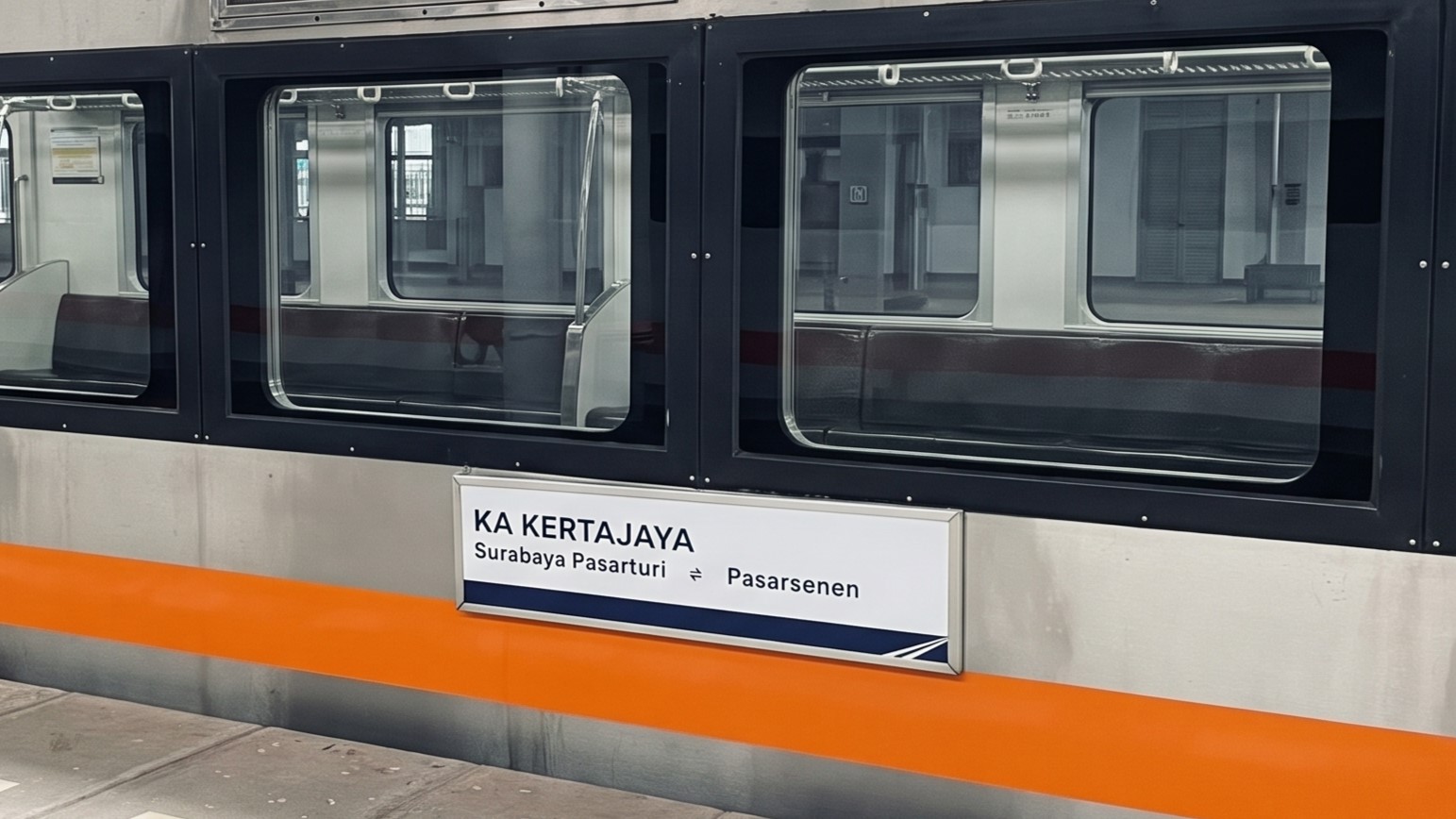
  • Full Restoration of 20 Services: Historic train names (including KA Sembrani, KA Argo Anjasmoro, KA Gumarang, KA Kertajaya, KA Argo Wilis, KA Argo Semeru, KA Matarmaja, KA Malioboro Ekspres, KA Bogowonto, KA Gajahwong, KA Tawang Jaya, KA Jaka Tingkir, KA Jayakarta, and KA Gaya Baru Malam Selatan) are 100% restored.
  • Gapeka 2026 Timetables Remain Fully Intact: The policy reversal is strictly confined to commercial nomenclature. The operational restructuring—39 additional passenger trips, 74 accelerated services, +8,466 daily seats (+5.03%), and 84 new station stop additions—takes effect nationwide on December 1, 2026.
  • Emerging Commuter Pushback: Public attention has shifted toward schedule shifts impacting weekly commuters (PJKA), notably KA Majapahit departure being advanced to 14:15 WIB and KA Bengawan morning arrival in Jakarta delayed to 08:20–08:30 WIB.

The 48-Hour Crisis Dynamics and Initial Management Rationale

Under Indonesian Railway Ministerial Regulation PM 110/2017, the Train Working Diagram (Gapeka) governs national rail operations, plotting route times, peak track speeds, crossing slots, and overtakes. Established by the Directorate General of Railways (DJKA) based on operator inputs, the new Gapeka 2026 replaces Gapeka 2025 starting December 1, 2026.

When ticket sales opened on November 1, prospective travelers discovered that established train names had vanished or been subsumed under master labels. Following widespread customer complaints across digital platforms, KAI executive leadership instructed the IT and Ticketing divisions to restore all original train names on Monday night, November 2. In an official press conference in Jakarta on Tuesday afternoon, November 3, Vice President Corporate Communication Anne Purba confirmed the cancellation, emphasizing KAI commitment to listening to passenger feedback and respecting the emotional and historical bonds passengers maintain with established train services.

"KAI listens attentively to all feedback from the public, rail enthusiast communities, and our loyal passengers. Train names carry profound historical significance and emotional value. Therefore, KAI has decided to retain all train names originally slated for consolidation in Gapeka 2026."

— Anne Purba, VP Corporate Communication PT Kereta Api Indonesia (Persero)
ARSITEKTUR KEBIJAKAN & DATA GAPEKA 2026 Evaluasi 4 Faktor Kegagalan Peleburan Nama & Peringkat Pemangkasan Waktu Tempuh
Efektif 1 Desember 2026
BAGIAN I: BEDAH 4 FAKTOR FUNDAMENTAL PENYEBAB PEMBATALAN DALAM <48 JAM 1 Asimetri Sarana Disparitas Kursi Fisik • Standarisasi Belum Siap: SS New Gen, Gen 1, dan Modifikasi disatukan. • Pengadaan INKA: 612 kereta baru baru selesai bertahap hingga 2027. 2 Risiko Salah Naik Headway & Boarding • Headway 30 Menit: Dua Dharmawangsa hadir bersamaan di peron SBI. • Preseden KA Muria: Terjadi salah naik nyata pada merger 1 Okt 2026. 3 Model Mental Heuristik Penumpang • Nama = Identitas Waktu: Bima & Turangga lekat sebagai kereta malam. • Kerancuan Jadwal: "Bima Pagi" menimbulkan disorientasi kedatangan. 4 Erosi Merek Sejarah Brand Equity Heritage • Merek Legendaris: Gaya Baru Malam Selatan, Argo Wilis, Kertajaya. • Kontradiksi Komunikasi: KAI sedang kampanye Rail Heritage Lawang Sewu. BAGIAN II: 10 PEMANGKASAN WAKTU TEMPUH TERBESAR PADA GAPEKA 2026 Dampak peningkatan kecepatan puncak lintasan (hingga 120 km/jam) dan optimalisasi recovery time (Total 74 KA dipercepat). 0 mnt 20 mnt 40 mnt 60 mnt 80 mnt 92 mnt (Maks) 1. KA Kahuripan Blitar → Kiaracondong -92 mnt 2. KA Pasundan Surabaya Gubeng → KAC -53 mnt 3. KA Airlangga Surabaya Pasarturi → PSE -52 mnt 4. KA Batavia Solo Balapan → Gambir -51 mnt 5. KA Sangkuriang Ketapang → Bandung -46 mnt 6. KA Pandalungan Gambir → Jember -45 mnt 7. KA Jayabaya Pasar Senen → Malang -40 mnt 8. KA Matarmaja Malang → Pasar Senen -35 mnt 9. KA Malabar Sore Malang → Bandung -22 mnt 10. KA Mutiara Timur Surabaya Pasarturi → KTG -20 mnt *Catatan: KA Sangkuriang arah timur (Bandung-Ketapang) bertambah ~50m akibat persilangan dan penambahan 6 stasiun pemberhentian.

Four Critical Failure Factors of the Consolidation Scheme

Analytical dissection reveals that the cancellation was not merely a public relations retreat, but a vital mitigation against acute operational and commercial hazards:

1. Rolling Stock Asymmetry and Interior Disparities

The primary design flaw in the Gapeka 2026 renaming plan was implementing brand unification prior to the physical standardization of passenger trainsets. In Indonesia, train names serve as primary indicators of carriage tiering and seating comfort:

  • KA Anggrek Cluster: The unified "KA Anggrek" brand brought together three distinct physical specifications: the original Anggrek sets featuring brand-new Stainless Steel New Generation (SS NG) coaches and Compartment Suites; ex-Argo Anjasmoro consists using standard Stainless Steel Generation 1 (SS Gen 1); and ex-Sembrani sets using SS Gen 1 paired with Luxury class. Passengers paying executive fares up to IDR 720,000 faced the risk of receiving older cabins depending on the chosen departure time.
  • KA Dharmawangsa Cluster: Subsumed KA 295 (ex-Kertajaya, operating with 80-seat brown Premium Economy coaches with fixed face-to-face configurations) and regular KA 179 (operating with 72-seat blue Modified New Generation captain seats facing forward). Casual travelers could not distinguish between seat types without deciphering four-digit train numbers.
  • KA Majapahit Cluster: Majapahit had established a brand expectation for factory-built INKA Stainless Steel New Generation trainsets; merging KA Matarmaja (utilizing modified legacy stock) diluted this brand promise.

2. Operational Wrong-Boarding Hazards & The Muria Precedent

Unifying train names created acute operational safety hazards at terminal and intermediate stations. The most severe hazard occurred on the Surabaya Pasarturi–Pasar Senen route, where two identically named KA Dharmawangsa services were scheduled to depart just 30 minutes apart (Train 295 at 22:30 WIB and Train 179 at 23:00 WIB). Both consists would occupy adjacent platform tracks during overlapping boarding windows, creating severe risks of passengers boarding the wrong train—a hazard that would ripple across all intermediate stations on the Pantura line.

This concern was validated by the real-world precedent of the KA Muria merger implemented on October 1, 2026. In Daop 4 Semarang, multiple reports emerged of passengers boarding the wrong train due to uniform naming across consecutive departures.

3. Clash of Mental Models: Brand Heuristics vs. Origin-Destination Paradigm

Management pushed an origin-destination search paradigm, expecting passengers to search by city pair and treat train names as secondary labels. However, for Indonesian rail travelers, specific train names function as integrated cognitive heuristics encapsulating four variables simultaneously: route corridor, departure time (morning vs. evening), carriage class, and fare tier. Rebranding KA Argo Semeru into "Morning Bima" caused cognitive confusion for a brand that has represented overnight travel for over half a century.

4. Dilution of Historical Brand Equity

Names like Gaya Baru Malam Selatan, Argo Wilis, Sembrani, Gumarang, and Kertajaya represent decades of cultural heritage in Indonesian public transportation. Pruning or eliminating these historic identities contradicted KAI simultaneous public relations campaigns celebrating railway history, such as the Rail Heritage Forum 2026 at Lawang Sewu Museum and the 10th anniversary celebration of KA Ranggajati in Cirebon.

Corporate Governance and Fleet Readiness Toward 2027

KAI prompt response highlights responsive customer experience governance. From January through October 2026, KAI Group transported 442,529,105 passengers, marking a 6.86% year-on-year increase (+28,412,158 journeys) over 2025:

KAI Group Entity / Service Segment Jan–Oct 2025 Volume Jan–Oct 2026 Volume YoY Growth
Total Consolidated KAI Group 414,116,947 passengers 442,529,105 passengers +6.86%
KAI Commuter (Urban Transit) 329,667,551 passengers 350,124,196 passengers +6.21%
Intercity & Regional Passenger Trains 45,814,275 passengers 49,932,766 passengers +8.99%
LRT Jabodebek 23,549,818 passengers 27,693,123 passengers +17.59%
Whoosh High-Speed Rail (KCIC/PSBI) 5,053,740 passengers 5,123,375 passengers +1.38%
Makassar–Parepare Line (South Sulawesi) 256,942 passengers 290,380 passengers +13.01%
KAI Wisata (Heritage & Charters) 191,745 passengers 258,381 passengers +34.75%

Under KAI Long-Term Corporate Plan (RJPP 2026–2030), intercity, regional, and LRT ridership is projected to expand by 67% to 141.3 million passengers by 2030. In 2026, KAI corporate Customer Satisfaction Index (CSI) scored 4.53, though station-level CSI declined to 4.46, with ticketing clarity and platform boarding areas identified as primary customer priorities.

From an equipment perspective, KAI is executing an ongoing capital procurement contract for 612 new passenger coaches from PT INKA (Persero) and 39 New Generation trainsets through 2027. With only 40 trainsets delivered as of November 2026, rolling stock disparity will persist until fleet-wide delivery is finalized in 2027, making brand mergers premature.

Structural Operations of Gapeka 2026 Proceed Fully on December 1

While train renamings have been halted, the structural operational overhaul under Gapeka 2026 will be implemented in full starting December 1, 2026:

Operational Parameter Gapeka 2025 Gapeka 2026 (Effective Dec 1) Growth / Variance
Total Daily Seat Capacity (Java & Sumatra) 168,316 seats/day 176,782 seats/day +8,466 seats/day (+5.03%)
Intercity Seat Capacity (Java) 132,680 seats/day 137,846 seats/day +5,166 seats/day (+3.89%)
Passenger Seat Capacity (Sumatra) 35,636 seats/day 38,936 seats/day +3,300 seats/day (+9.26%)
Scheduled Passenger Train Trips 1,813 trips/day 1,852 trips/day +39 trips/day (+2.15%)
Gambir Station Intercity Departures 39 trips/day 45 trips/day +6 trips/day (+15.38%)
Daop 4 Semarang Total Passenger Trips 100 trips/day 108 trips/day +8 trips/day (+8.00%)

Travel Time Acceleration on 74 Intercity Services

Track upgrades and elevated maximum operating speeds (up to 120 km/h between Tanggul and Jember) allow KAI to trim running times across 74 services:

  • KA Kahuripan (Blitar–Kiaracondong): Accelerated by 92 minutes (from 14h 05m down to 12h 33m).
  • KA Pasundan (Surabaya Gubeng–Kiaracondong): Accelerated by 53 minutes.
  • KA Airlangga (Surabaya Pasarturi–Pasar Senen): Accelerated by 52 minutes westbound and 51 minutes eastbound.
  • KA Batavia (Solo Balapan–Gambir): Accelerated by 51 minutes.
  • KA Sangkuriang (Ketapang–Bandung): Accelerated by 46 minutes westbound.
  • KA Pandalungan (Gambir–Jember): Accelerated by 45 minutes.
  • KA Jayabaya (Pasar Senen–Malang): Accelerated by 40 minutes.
  • KA Matarmaja (Malang–Pasar Senen): Accelerated by 35 minutes.
  • KA Malabar Sore, KA Mutiara Timur, KA Singasari, and KA Brantas: Trimmed by 9 to 22 minutes.

Satellite Station Expansion Across Greater Jakarta

To reduce crowding at Gambir and Pasar Senen, KAI added boarding stops across 84 services in eastern satellite hubs:

  • Cikarang Station: Gains 6 intercity services (reaching 58 daily trains), accommodating KA Manahan (61), KA Pangandaran (128), KA Parahyangan (133 & 134), KA Singasari (149), and KA Tawangjaya Premium (213).
  • Bekasi Station: Gains 3 intercity services (reaching 139 daily trains), adding KA Manahan (59), KA Bangunkarta (176), and KA Tegal Bahari (226).
  • Jatinegara Station: Adds stops for KA Cakrabuana (123) and KA Gumarang (178).
  • Route Extensions & Regional Stops: KA Pangandaran extended to Sidareja Station (Cilacap, 37 km from Pangandaran Beach) supported by a 176-meter platform upgrade; KA Kedungsepur extended to Weleri–Ngrombo; Rajapolah Station served by KA Serayu (Trains 318 & 322) and KA Sangkuriang; Comal Station served by KA Jayabaya and Kaligung.

Emerging Friction: Disruption for Weekly Commuters (PJKA)

While nomenclature concerns have subsided, public attention has shifted toward the commuter challenges of cross-province workers:

  • KA Majapahit (Pasar Senen–Malang): Departure shifted 3 hours 25 minutes earlier from 17:40 WIB to 14:15 WIB during core Friday working hours, complicating departures for workers in Jakarta.
  • KA Bengawan (Purwosari–Pasar Senen): The primary subsidized train for migrant workers (IDR 74,000) sees its Pasar Senen arrival pushed back from 07:34 WIB to 08:20–08:30 WIB, risking late arrival for office hours on Monday mornings.

Strategic Recommendations and Passenger Advisory

Strategic Imperatives for PT KAI Management

  1. Hardware-First Branding: Service consolidation must only be initiated after fleet standardization delivers identical passenger coach configurations on the affected corridor.
  2. Explicit Trainset Tagging on Digital Apps: Display interior seat models clearly (e.g., Stainless Steel New Gen, Modified New Gen, Gen 1) on Access by KAI booking screens.
  3. Centralized Communication Synchronization: Ensure regional Daop communications instantly reflect central corporate policy updates.
  4. Commuter Timetable Mitigation: Provide afternoon alternatives for the Pasar Senen–Malang route and early-morning arrival options for Central Java–Jakarta commuters.

Actionable Passenger Advisory

  1. Re-verify E-Tickets: Tickets booked on November 1–2, 2026 have automatically updated to original train names in Access by KAI without any change to passenger travel rights.
  2. Check Updated Timetables: The return to original train names does not imply 2025 timetables remain in place. Pay close attention to departure shifts on KA Majapahit, KA Bengawan, KA Kahuripan, and KA Tawang Jaya Premium.
  3. Utilize Satellite Stations: Travelers in Bekasi, Cikarang, Karawang, and Cikampek can board intercity trains directly at their nearest hub beginning December 1, 2026.

Official References

  1. PT Kereta Api Indonesia (Persero). (November 3, 2026). Official Press Release: KAI Group Serves 442.53 Million Passengers; Public Feedback Guides Service Enhancements. Jakarta: KAI.
  2. PT Kereta Api Indonesia (Persero). (November 3, 2026). Gapeka 2026: KAI Adds 8,466 Daily Seats, Expanding Nationwide Travel Choices.
  3. CNN Indonesia. (November 3, 2026). KAI Cancels Train Service Renaming Plan Following Public Criticism.
  4. Kompas.com. (November 4, 2026). KAI Halts Renaming of Multiple Passenger Trains in Gapeka 2026.
  5. Liputan6.com. (November 4–5, 2026). KAI Reverses Train Renaming in Gapeka 2026 as Weekly Commuters Voice Concerns Over Schedule Shifts.
  6. Republika. (November 3–4, 2026). Heeding Commuter Voices: KAI Cancels Train Renaming and Outlines 2030 Passenger Projections.
  7. ANTARA News. (November 3–6, 2026). Intercity Rail Activity in Bekasi Surges 9.76 Percent as KAI Expands Jakarta Satellite Transit Hubs.
  8. RRI Jember & Cirebon. (November 3–6, 2026). Gapeka 2026: Regional Station Stops and 10th Anniversary of KA Ranggajati.
Key Takeaways & Assistive Q&A
Why did PT KAI cancel its train service renaming and consolidation plan in Gapeka 2026?
Management reversed the policy within 48 hours following widespread pushback from passenger communities and railfans, an operational review of platform wrong-boarding hazards during tight 30-minute headways, interior rolling stock disparities under unified branding, and the necessity to preserve decades of brand heritage.
Does the reversal of the renaming plan cancel the Gapeka 2026 operational timetable changes?
No. The reversal is strictly confined to train naming nomenclature. All operational timetable improvements—including 39 additional daily trips, a 5.03% daily seat expansion (+8,466 seats/day), accelerated travel times on 74 services (up to 92 minutes faster on KA Kahuripan), and new station stops—remain fully effective starting December 1, 2026.
What are the four core factors that caused the consolidation plan to fail?
The four structural failure factors are: (1) Rolling stock asymmetry and seat disparity; (2) Operational wrong-boarding hazards at terminal and intermediate stations; (3) Disruption of passenger mental models and heuristics; and (4) Erosion of long-standing railway brand equity.
What should passengers who booked tickets on November 1–2, 2026 do?
Passengers should verify their e-tickets in the Access by KAI app. The system automatically restored original train names (such as Kertajaya, Sembrani, and Gumarang) without altering booking codes, coach assignments, or scheduled departure times.

Related Dispatches

Officially Cancelled: PT KAI Halts 23 Used EMU Imports, Mandates 23 New Trainsets via PT INKA Flexible Production
Policy & Regulations

Officially Cancelled: PT KAI Halts 23 Used EMU Imports, Mandates 23 New Trainsets via PT INKA Flexible Production

Planned Train Service Renaming and Fleet Consolidation in Gapeka 2026: Operational Implications & Headway Dynamics
Operations

Planned Train Service Renaming and Fleet Consolidation in Gapeka 2026: Operational Implications & Headway Dynamics

Architecture of KAI Group Subsidiaries Ecosystem: Intermodal Rail Synergy & Integrated Transport Infrastructure in Indonesia
Corporate Architecture

Architecture of KAI Group Subsidiaries Ecosystem: Intermodal Rail Synergy & Integrated Transport Infrastructure in Indonesia

alurail alurail
Built upon GAPEKA 2025, visualized open-sourcedly with OpenRailwayMap and Leaflet.js. Powered by PostgreSQL (PostGIS, pgRouting), Dijkstra/A* Algorithms dan Viterbi Algorithm
Copyright ©️ 2024-2026 alurail by alula Made with 💗 from Pejaten, ID
Copyright ©️ 2024-2026 alurail by alula
Made with 💗 from Pejaten, ID

Community & Photographers

  • alurail Pass PRO
  • Submit Photo
  • User Suite
  • Curated Feed
  • Community Feed

Platform & Legal

  • About Platform
  • Terms & Conditions
  • Privacy Policy
  • Open Source Notices
  • FAQ / Help Center
Pass PRO PRO Upload Photo Suite Gallery
About
Terms
Privacy
License
FAQ
© 2026 alurail. All rights reserved.
alurail

alurail Legal & Info

About alurail

<h2>About AluRail</h2>

<p class="lead">
AluRail (Aluline TGV) is a free web-based platform that visualizes railway operations and train travel schedules across Indonesia. The service is available through <a href="https://aluline.id" target="_blank">aluline.id</a> and <a href="https://aluline.my.id" target="_blank">aluline.my.id</a>, developed independently by <strong>Alula</strong>
(<a href="https://alula.web.id" target="_blank">alula.web.id</a>) for railway enthusiasts (railfans) and passengers seeking a more intuitive understanding of train movements and timetable operations.
</p>

<h3>How It Works</h3>

<p>
AluRail transforms official <strong>GAPEKA 2025</strong> (Indonesia Railway Timetable Graph) data into an interactive geospatial visualization. Every train journey is reconstructed from scheduled departure and arrival times, station sequences, railway topology, and routing calculations to estimate how trains would move across the network.
</p>

<p>
Unlike conventional timetable viewers, AluRail continuously simulates train movement using a custom railway physics engine. The simulation considers various operational parameters including route geometry, train acceleration, braking, cruising speed, station dwell times, operational constraints, and other physical assumptions to estimate each train's position throughout its journey.
</p>

<p>
Whenever available, the platform also supports <strong>Crowdsourced Live Tracking</strong>. Passengers currently travelling on board may voluntarily share their GPS location. These telemetry reports are validated using map-matching algorithms and compared against the predicted GAPEKA route before being displayed to other users.
</p>

<h3>The Technology Behind AluRail</h3>

<ul>
<li><strong>PostgreSQL (PostGIS):</strong> Serves as the core geospatial database storing railway infrastructure, stations, and spatial relationships.</li>

<li><strong>Custom Railway Routing Engine:</strong> Implements graph-based routing algorithms including Dijkstra and A* to calculate railway paths, station connectivity, and operational routes.</li>

<li><strong>Railway Physics Engine:</strong> Simulates train movement by modelling acceleration, deceleration, cruising behaviour, station stops, speed restrictions, and travel progression based on timetable data.</li>

<li><strong>Viterbi Map-Matching:</strong> Validates crowdsourced GPS telemetry by matching noisy GPS observations onto the most probable railway track, improving live tracking reliability.</li>

<li><strong>Leaflet.js & OpenRailwayMap:</strong> Provide interactive map rendering and railway visualization layers.</li>
</ul>

<h3>Supported Railway Services</h3>

<p>
AluRail supports visualization for various railway services operating across Indonesia, including passenger, commuter, urban transit, heritage, and freight operations. Depending on data availability, the platform currently supports:
</p>

<ul>
<li>Intercity Passenger Trains (KA Antar Kota)</li>
<li>Whoosh High-Speed Railway</li>
<li>Commuter Line</li>
<li>Feeder Train Services</li>
<li>Local Passenger Trains</li>
<li>Freight Operations (Container, Cargo, Tanker, Coal, Cement and other freight services)</li>
<li>LRT Jakarta</li>
<li>LRT Jabodebek</li>
<li>LRT South Sumatra (Palembang)</li>
<li>Jakarta MRT</li>
<li>Ambarawa Heritage Railway</li>
</ul>

<p>
Additional railway operators and future services may be introduced as more infrastructure and timetable data become available.
</p>

<h3>Platform Features</h3>

<p>
AluRail combines timetable simulation, geospatial analysis, and live community participation into a single railway visualization platform. Key features include:
</p>

<ul>

<li>
<strong>Follow Mode</strong><br>
Automatically follows a selected train throughout its journey while continuously updating its estimated or live position.
</li>

<li>
<strong>Live GPS Cast</strong><br>
Passengers may voluntarily broadcast GPS telemetry while travelling onboard, allowing supported trains to display verified live positions instead of purely simulated movement.
</li>

<li>
<strong>Spotting Mode</strong><br>
Allows railfans to discover trains approaching nearby stations or railway crossings, making it easier to plan photography and train spotting activities.
</li>

<li>
<strong>Enhanced Railway Physics</strong><br>
Movement simulation considers railway gradient, elevation profile, track curvature, acceleration, braking, traction performance, speed restrictions, and operational constraints to produce more realistic train behaviour.
</li>

<li>
<strong>Detailed Route Analytics</strong><br>
Provides interactive charts including route elevation, curvature, gradient between stations, speed profile, and operational characteristics throughout the journey.
</li>

<li>
<strong>Train Information</strong><br>
Displays operational information about each service including operator, train category, route, schedule, formation details, and other service information.
</li>

<li>
<strong>Rolling Stock Database</strong><br>
Provides information about locomotives, EMUs, DMUs, coaches, wagons, and other railway vehicles used by supported services.
</li>

<li>
<strong>Coach & Class Information</strong><br>
Displays available passenger classes together with reference illustrations where available to help passengers identify onboard accommodation.
</li>
<li>
<strong>Adaptive Train Rendering</strong><br>
Train visualization automatically adjusts according to the current map zoom level. Different rendering modes are used to maintain smooth performance while displaying thousands of simultaneously simulated trains.
</li>

<li>
<strong>Train Filtering</strong><br>
Filter trains by service category such as Intercity, Commuter, High-Speed, Metro, LRT, Freight, Heritage, and other supported railway services.
</li>

<li>
<strong>Regional Filtering</strong><br>
Display trains operating within selected operational regions (Daerah Operasi / DAOP and other railway operational divisions) for easier monitoring.
</li>

<li>
<strong>Points of Interest (POI)</strong><br>
Explore railway-related locations including train spotting locations, photography viewpoints, railway landmarks, bridges, tunnels, stations, and other notable locations along the railway network.
</li>

<li>
<strong>Depots & Maintenance Facilities</strong><br>
View railway maintenance facilities including rolling stock depots, locomotive depots, maintenance workshops (Balai Yasa), stabling yards, and other operational infrastructure.
</li>

</ul>

<div class="disclaimer-box">
<h4>Disclaimer</h4>

<p>
<strong>AluRail is primarily a timetable simulation platform.</strong>
Unless a train is actively sharing verified Live Tracking data, all train positions displayed on the map are computational estimations generated from published schedules and the platform's railway physics engine.
</p>

<p>
Although the simulation attempts to realistically reproduce railway operations, actual train movements may differ significantly due to dispatching decisions, signal aspects, operational priorities, temporary speed restrictions, maintenance work, weather conditions, delays, early departures, extraordinary operations, GPS inaccuracies, or many other real-world factors that cannot always be observed by the platform.
</p>

<p>
Even when Live Tracking is available, GPS accuracy depends on user participation, mobile device quality, satellite reception, and local environmental conditions. Therefore, displayed positions should always be considered informational rather than authoritative.
</p>

<p>
<strong>This service must not be used as an official operational reference</strong> for travel planning, ticketing decisions, passenger information, or railway operations. Always refer to official PT Kereta Api Indonesia (Persero) information channels for accurate operational updates.
</p>

<p>
AluRail / Aluline TGV is an independent community project and is not affiliated with, endorsed by, partnered with, or officially associated with PT Kereta Api Indonesia (Persero), OpenStreetMap, OpenRailwayMap, or any other referenced organizations.
</p>
</div>

<p class="footer-note">
Made with ❣️ from Pejaten, Indonesia.
</p>

Terms of Use

<section id="terms-en" class="lang-content">
<h2>Terms of Service</h2>
<p class="effective-date"><strong>Effective Date:</strong> January 1, 2025 (Updated for GAPEKA 2025)</p>

<h3>1. Acceptance of Terms</h3>
<p>By accessing AluRail through aluline.id, aluline.my.id, and related subdomains (collectively, the "Service"), you acknowledge that you have read, understood, and agreed to these Terms of Service. If you do not agree, you must discontinue use of the Service.</p>

<h3>2. Independent Service</h3>
<p>AluRail is an independent community project developed by Alula. It is not affiliated with, endorsed by, or operated by any railway operator, government agency, or transportation authority unless explicitly stated.</p>

<h3>3. Nature of the Service</h3>
<p>The Service provides train schedule visualization, estimated train positions, operational simulations, and crowdsourced location validation based on publicly available information, GAPEKA data, and algorithmic processing. Displayed information may differ from actual railway operations.</p>

<h3>4. No Operational Guarantee</h3>
<p>Train movements, schedules, platform assignments, delays, cancellations, dispatching decisions, and operational conditions may change without notice. The Service must not be considered an official operational information source.</p>

<h3>5. Crowdsourced Contributions</h3>
<p>Users may voluntarily contribute GPS telemetry while onboard trains. Submission of fake GPS data, manipulated locations, automated submissions, spam, or attempts to interfere with system accuracy is strictly prohibited.</p>

<h3>6. Acceptable Use</h3>
<p>You agree not to misuse the Service, interfere with its infrastructure, reverse engineer protected components, exploit security vulnerabilities, scrape excessive data, or use automated systems that negatively impact platform availability.</p>

<h3>7. Intellectual Property</h3>
<p>Unless otherwise stated, the Service, its software, interface, branding, and original content remain the intellectual property of their respective owners. Open-source components remain governed by their own licenses.</p>

<h3>8. Availability</h3>
<p>The Service may be modified, suspended, restricted, or discontinued at any time without prior notice.</p>

<h3>9. Disclaimer ("AS IS")</h3>
<p>THE SERVICE IS PROVIDED "AS IS" AND "AS AVAILABLE" WITHOUT WARRANTIES OF ANY KIND, EXPRESS OR IMPLIED, INCLUDING MERCHANTABILITY, FITNESS FOR A PARTICULAR PURPOSE, NON-INFRINGEMENT, ACCURACY, OR CONTINUOUS AVAILABILITY.</p>

<h3>10. Limitation of Liability</h3>
<p>To the fullest extent permitted by law, Alula shall not be liable for direct, indirect, incidental, consequential, special, or punitive damages arising from the use of or inability to use the Service, including travel decisions, delays, missed connections, financial loss, personal injury, or data loss.</p>

<h3>11. Changes to these Terms</h3>
<p>These Terms may be updated periodically. Continued use of the Service constitutes acceptance of the revised Terms.</p>

<h3>12. Contact</h3>
<p>Questions regarding these Terms may be directed through the official AluRail contact channels.</p>
</section>

<h3>Independent Service Disclaimer</h3>

<p>AluRail is an independent community-developed platform created by Alula for railway visualization, research, educational, and enthusiast purposes.</p>

<p>AluRail is <strong>not affiliated with, associated with, authorized by, endorsed by, sponsored by, supported by, maintained by, operated by, or officially connected with</strong> PT Kereta Api Indonesia (Persero), PT Kereta Commuter Indonesia, PT Kereta Api Logistik, PT Kereta Api Pariwisata, PT Kereta Cepat Indonesia China (Whoosh), MRT Jakarta, LRT Jabodebek, LRT Jakarta, LRT Sumatera Selatan (Palembang), their subsidiaries, affiliates, successors, government agencies, transportation authorities, or any other railway operators unless explicitly stated.</p>

<p>All company names, railway service names, station names, train names, logos, trademarks, service marks, brands, route names, and other intellectual property displayed within the Service remain the property of their respective owners and are used solely for identification, informational, interoperability, historical, mapping, educational, or descriptive purposes.</p>

<p>The visualization presented by the Service represents publicly available operational information, algorithmic estimations, historical references, and voluntary community contributions. It must not be interpreted as an official operational system, railway dispatching platform, passenger information system, or real-time control center operated by any railway company.</p>

Privacy Policy

<section id="privacy-en" class="lang-content">
<h2>Privacy Policy</h2>
<p class="effective-date"><strong>Last Updated:</strong> June 2026</p>

<h3>1. Privacy Commitment</h3>
<p>Your privacy is important to us. We collect only the information reasonably necessary to operate and improve the Service.</p>

<h3>2. GPS Collection</h3>
<p>Your GPS location is accessed only after you intentionally enable Live Tracking. Background location is never collected without your explicit action.</p>

<h3>3. Processing</h3>
<p>Submitted GPS telemetry is processed using routing algorithms including Viterbi matching against the railway network to validate train positions. Telemetry is not associated with your personal identity.</p>

<h3>4. Server Logs</h3>
<p>Standard server logs such as IP address, browser type, timestamps, and technical diagnostics may be collected for security, abuse prevention, troubleshooting, and performance monitoring.</p>

<h3>5. Data Retention</h3>
<p>Live telemetry is temporary and automatically expires after the associated trip ends unless longer retention is required for security investigations.</p>

<h3>6. Third Parties</h3>
<p>We do not sell or rent your GPS telemetry. Limited technical processing by infrastructure providers may occur solely for operating the Service.</p>

<h3>7. Security</h3>
<p>Reasonable technical and organizational safeguards are implemented, although no online system can guarantee absolute security.</p>

<h3>8. User Safety</h3>
<p>We discourage publicly sharing real-time GPS positions. Anonymous mode or pseudonyms are strongly recommended.</p>

<h3>9. Your Responsibility</h3>
<p>Use of Live GPS or spotting features is entirely voluntary and at your own risk.</p>
</section>

Open Source Notices

<section id="opensource-en" class="lang-content">
<h2>Open Source Notice</h2>
<p>AluRail is built upon numerous open-source technologies and open data projects. We sincerely thank the communities maintaining them.</p>
<ul>
<li><strong>PostgreSQL, PostGIS & pgRouting</strong> — Spatial database, GIS extension, and routing engine.</li>
<li><strong>OpenStreetMap & OpenRailwayMap</strong> — Railway infrastructure and mapping data under their respective licenses.</li>
<li><strong>Leaflet.js</strong> — Interactive mapping library.</li>
</ul>
<p>All trademarks, copyrights, and licenses belong to their respective owners. Use within AluRail does not imply endorsement by those projects.</p>
</section>
alurail Pass Prime GRATIS!
early access

alurail Pass Prime GRATIS!